If you are shopped for an airbrush or browsed through forums, you’ve probably come across the terms internal mix and external mix — and wondered, what exactly does that mean… and which one do I need?
You’re not alone. For beginners, understanding airbrush mix types can feel confusing and overly technical — but choosing the wrong one could mean frustrating clogs, blotchy results, or wasted money on gear that doesn’t match your style of painting.
I’ve been airbrushing for years across multiple applications — from fine detail work to broader coverage on apparel and surfaces. I’ve used both internal and external mix airbrushes extensively, and I can tell you firsthand: knowing how each one works (and when to use it) makes a massive difference.
In this guide, I’ll break down everything you need to know — clearly so you can understand the differences, make the right decision for your needs, and feel confident moving forward.
🎨 1. Airbrush Mix Types
At the heart of every airbrush is a simple but crucial function: mixing air and paint to create a spray pattern. Where and how that mixing happens determines how smooth, controlled, or coarse your results will be. That’s what we’re talking about when we refer to mix types in airbrushing.
There are two primary mix types:
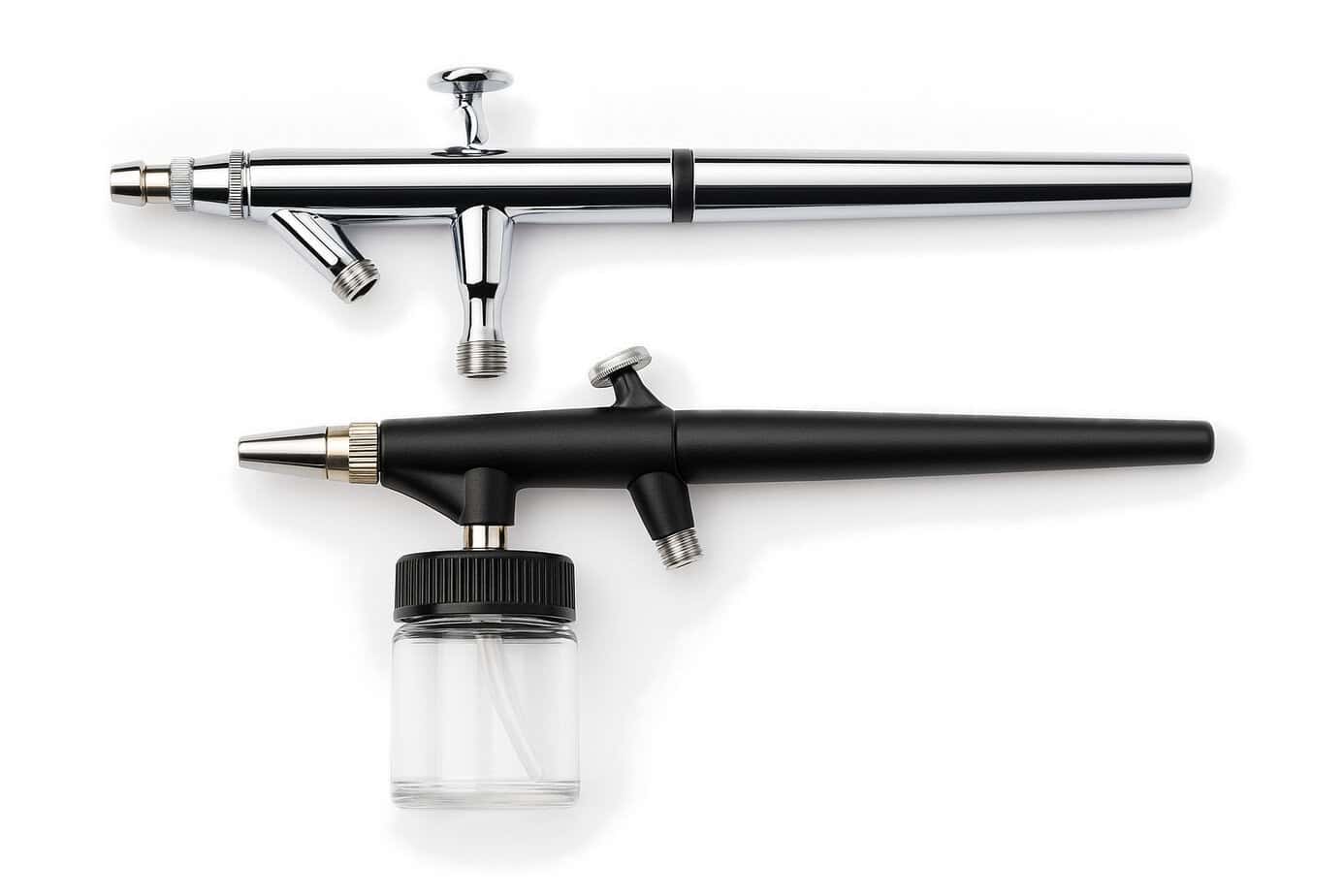
- 🧪 Internal Mix — where the air and paint mix inside the airbrush’s nozzle before exiting the tip. This allows for a much finer atomization of the paint, resulting in smoother gradients, better detail control, and cleaner lines. It’s the preferred choice for artists working on miniatures, detailed illustrations, or automotive graphics where precision is key.
- 🌫️ External Mix — where the paint and air meet outside the nozzle, just beyond the airbrush tip. This creates a broader, coarser spray that is typically less refined but more forgiving when it comes to large surface coverage or simple base-coating. It’s ideal for T-shirts, craft projects, or applying primer coats.
❓ Why Does Mix Type Matter?
The mix type affects everything from how fine the spray is to how easy the airbrush is to clean. Beginners often overlook this — but it has a big impact on your first airbrushing experience. A poorly matched airbrush can lead to:
- 💥 Paint that spatters instead of mists
- 🎯 Trouble getting clean lines or fades
- 🚫 More frequent clogs
- 🧼 Frustration with cleanup or technique
Understanding mix types also helps set expectations: internal mix requires more finesse and maintenance, while external mix offers simplicity and ease of use — especially for those just getting started.
We’ll explore each type in detail next — but for now, just remember: the mix type controls how your airbrush behaves. Getting this right is the first step toward predictable, enjoyable results.
🧪 2. Internal Mix Airbrush Explained
Internal mix airbrushes are designed to mix the paint and air inside the nozzle chamber before it exits the tip. This internal atomization process breaks the paint into an extremely fine mist, allowing for superior control and detail.
🔍 Key Characteristics
- 🌀 Fine Atomization: Excellent for achieving soft gradients, subtle shading, and detailed line work.
- 🛠️ Precision-Oriented: Great for applications like miniature painting, portrait art, custom graphics, and automotive detailing.
- 🔧 Higher Maintenance: Because the mixing happens inside, clogs are more likely and cleaning is more involved.
🎯 Ideal For:
- Model builders painting Warhammer, Gundam, or scale miniatures
- Artists needing tight detail and clean edges
- Anyone doing shading, layering, or highly controlled effects
📌 Good to Know
Internal mix airbrushes often come paired with dual-action triggers and gravity-feed cups, both of which further improve control. While there’s a slight learning curve, the payoff in precision is well worth it — especially if you plan to grow your skill over time.
🌫️ 3. External Mix Airbrush Explained
External mix airbrushes work by introducing paint and air outside the nozzle. Instead of mixing inside the chamber like internal mix airbrushes, the two elements meet just beyond the tip, where the high-velocity air draws paint into the stream.
🔍 Key Characteristics
- 🌬️ Coarse Atomization: Produces a broader, less refined spray that’s ideal for simple coverage.
- 🔁 Lower Maintenance: Less prone to clogs because the paint never passes through fine internal channels.
- 🧰 Beginner-Friendly: Easier to clean, simpler to operate, and typically more forgiving during early practice.
🎯 Ideal For:
- T-shirt and fabric artists working with textile paints
- General hobbyists doing large-surface base coating or craft painting
- Spraying primers or clear coats on models, signs, or props
📌 Good to Know
External mix airbrushes are often single-action, meaning the trigger only controls airflow, not paint flow. This makes them less precise, but far easier to handle for quick, casual, or repetitive tasks. They’re also commonly paired with siphon-feed bottles, which allow for longer spray sessions without frequent refills.
⚖️ 4. Internal vs External Mix: Side-by-Side Comparison
Now that you know how each type works, let’s compare them directly across the most important criteria.
📊 Quick Comparison Table
| Feature | Internal Mix | External Mix |
|---|---|---|
| Spray Quality | 🌀 Fine, controlled mist | 🌬️ Coarse, wide spray |
| Detail Capability | 🎯 Excellent for precision | 🚫 Limited detail control |
| Ease of Use | ⚠️ Slight learning curve | ✅ Very beginner-friendly |
| Clogging Risk | 🔧 Higher (more internal pathways) | 🧼 Lower (paint stays external) |
| Maintenance Required | 🛠️ Frequent cleaning needed | 🧹 Easier to clean and maintain |
| Paint Efficiency | ✅ More efficient (less overspray) | 💨 Uses more paint |
| Best Use Cases | 🎨 Miniatures, detail work, artwork | 👕 Fabrics, base coats, primers |
| Typical Trigger Type | 🎮 Dual-action | 🖱️ Single-action |
| Price Range | 💵 Moderate to high | 💲 Typically lower cost |
This side-by-side format helps make the differences tangible — and helps you quickly decide which airbrush type fits your needs and goals.
🧠 5. Expert Insights: Which Should You Choose as a Beginner?
If you’re just getting started with airbrushing, the decision between internal and external mix can feel intimidating — but it doesn’t have to be. Here’s my advice based on years of hands-on experience:
🎯 Start With Your Purpose
Ask yourself: What am I planning to airbrush most often?
- If your focus is models, miniatures, or illustration, go with an internal mix airbrush. The detail and control you’ll gain are worth the learning curve.
- If you’re painting T-shirts, props, or large flat areas, consider an external mix airbrush for its ease of use and faster coverage.
💡 What I Recommend to Most Beginners
In most cases, I recommend starting with a gravity-feed internal mix airbrush, especially if you’re planning to grow your skills and tackle a variety of projects. The control you gain from the start will teach you better technique — and that pays off over time.
That said, there’s no shame in going with an external mix setup if your needs are basic and you want something simple to start with. It’s all about matching your tools to your goals.
🔄 My Personal Take
I’ve used both styles on everything from finely detailed busts to spraying t-shirts at events. Internal mix is my go-to for serious work — but I always keep an external mix brush on hand for quick priming and large-area tasks. The real power comes from knowing when (and why) to use each one.
✅ 6. Final Thoughts
Choosing the right airbrush mix type can set the tone for your entire airbrushing experience. Internal mix airbrushes offer precision, finesse, and a steeper learning curve — ideal for artists who want detail and control. External mix airbrushes offer simplicity, speed, and ease — perfect for those who want to jump in and start spraying.
There’s no one-size-fits-all answer. The best airbrush is the one that fits your specific goals and helps you stay excited to create.
If you’re still unsure, revisit the comparison table above and consider starting with a beginner-friendly internal mix option — it’s the most versatile for growing your skills over time.
Happy airbrushing! 🎨
❓ 7. Frequently Asked Questions
🧼 Which airbrush type is easier to clean?
External mix airbrushes are generally easier to clean because the paint never flows through tiny internal parts. Internal mix brushes offer more precision but require more thorough maintenance.
🎨 Can I use acrylic paint in either type?
Yes — both internal and external mix airbrushes can spray acrylics. Just make sure the paint is properly thinned and compatible with your setup. Internal mix brushes tend to work better for fine-detail acrylic work.
🔁 Can I switch from external to internal mix later?
Absolutely. Many beginners start with external mix for its simplicity, then upgrade to internal mix as they get more comfortable and want more control.
👕 Which is better for T-shirts, models, or canvas?
- For T-shirts and fabric: External mix (wider spray, less clogging)
- For models and detail work: Internal mix (cleaner lines and better atomization)
- For canvas and mixed media: Either can work, but internal mix offers more flexibility if you’re layering and blending.
🧽 What cleaning tools are best for internal mix airbrushes?
Use a soft-bristled brush set, airbrush cleaner solution, and nozzle cleaning needles or micro brushes. A cleaning pot and backflushing technique can also help loosen dried paint.
💨 Why is my external mix airbrush sputtering?
Sputtering often means the air pressure is too low, the paint is too thick, or the siphon tube isn’t seated properly. Try adjusting your PSI, thinning your paint more, and checking for air leaks or blockages.
🧪 Can I use both types on the same project?
Yes! Many pros use external mix brushes for priming or base coats, then switch to internal mix for detail work. Mixing tools based on the task gives the best results.
💰 Are internal mix airbrushes worth the higher cost?
For serious hobbyists or artists, yes. The fine atomization, control, and finish quality make them well worth the investment — especially if you plan to use it regularly or professionally.