Are you curious about double action airbrushes—or wondering if they’re the right next step in your airbrushing journey?
You’re in the perfect place.
Double action airbrushes are legendary for delivering precision, smooth gradients, and artistic flexibility. Yet they’re often misunderstood—and can intimidate beginners who hear they’re “harder to use.”
In this guide, I’ll show you exactly:
- What a double action airbrush is (in plain English and technical terms)
- How it operates and why it’s so versatile
- Pros and cons compared to single action models
- Where double action airbrushes shine—and where they might be overkill
- The best models loved by hobbyists and pros alike
Let’s cut through the mystery—and help you decide if double action is the game-changer you’ve been looking for.
Want to skip straight to my top recommended double action airbrushes?
👉 Go to Recommended Models
🎨 What Is a Double Action Airbrush?
Double action airbrush (noun): A precision spraying tool in which pressing the trigger controls airflow, while pulling the trigger back regulates paint flow in real-time, allowing dynamic adjustment of spray width, paint volume, and artistic effects mid-stroke.
Simply put—a double action airbrush lets you:
- Press the trigger down → air starts flowing.
- Pull the trigger back → paint starts flowing, and the further you pull, the more paint you spray.
This “two actions in one trigger” is why it’s called double action (sometimes also called dual action—they mean the same thing).
Compared to a single action airbrush—where pressing the trigger simply starts both air and a fixed paint amount—a double action airbrush gives you on-the-fly control over how much paint comes out. It’s like the difference between a spray paint can and a musical instrument.
⚙️ How Does a Double Action Airbrush Work?

A double action airbrush has a few unique features under the hood. Let’s break it down.
1. The Air Valve
- When you press the trigger straight down, you open an internal valve.
- Compressed air flows through the airbrush body and exits the nozzle at high velocity.
2. The Needle & Paint Flow
- Inside the airbrush is a long, tapered needle that sits inside the nozzle.
- At rest, the needle blocks paint from escaping.
- Pulling the trigger backward slides the needle rearward, opening a gap for paint to flow.
- The further you pull back, the wider the nozzle opening → more paint flows → broader or heavier spray.
3. Dynamic Control
This two-motion system allows incredible control:
- Fine lines → gentle trigger pull.
- Wide sprays → full pull-back.
- Instant fades and dagger strokes → vary how far you pull while moving the brush.
This is why artists love double action airbrushes for:
- Smooth gradients
- Soft edges
- Tight detail
- Artistic flourishes like dagger strokes
🔁 Double Action vs Single Action: The Key Difference
Here’s the essential comparison:
| Feature | Double Action Airbrush | Single Action Airbrush |
|---|---|---|
| Trigger Function | Air and paint flow controlled by trigger | Air only controlled by trigger |
| Paint Adjustment | Dynamic, mid-spray | Fixed via rear knob |
| Detail Capability | Excellent for fine details | Limited |
| Ease of Use | Steeper learning curve | Very easy |
| Price Range | Generally higher | Generally lower |
The big difference: Double action gives real-time control over paint flow. Single action does not.
🛠️ Pros & Cons of Double Action Airbrushes
Like any tool, double action airbrushes come with trade-offs.
| ✅ Pros | ❌ Cons |
|---|---|
| Precision control of paint flow | Higher learning curve |
| Dynamic spray width changes | Often more expensive |
| Ideal for fine detail and shading | More parts to clean and maintain |
| Excellent for gradients and fades | Can feel intimidating at first |
🧭 Best Use Cases for Double Action Airbrushes
So, when should you choose double action? Here’s where they shine:
✔️ Fine Art & Illustration
Photorealistic portraits, automotive graphics, or custom artwork demand seamless fades and detail only double action can deliver.
✔️ Scale Modeling
Miniature painters often switch between ultra-fine lines for panel lining and broader shading without changing tools mid-project.
✔️ T-Shirt Art & Textiles
Artists doing freehand designs need fast adjustments between thin lines and fills.
✔️ Automotive & Custom Graphics
Double action makes it easy to blend candy colors, produce soft edges, or fade flames seamlessly across a hood or tank.
✔️ Advanced Hobby Work
If you love experimenting with effects—dagger strokes, stippling, fades—a double action airbrush opens those doors.
🔍 Recommended Models & Community Favorites
Not all double action airbrushes are created equal. Here are some battle-tested favorites among hobbyists and professionals:
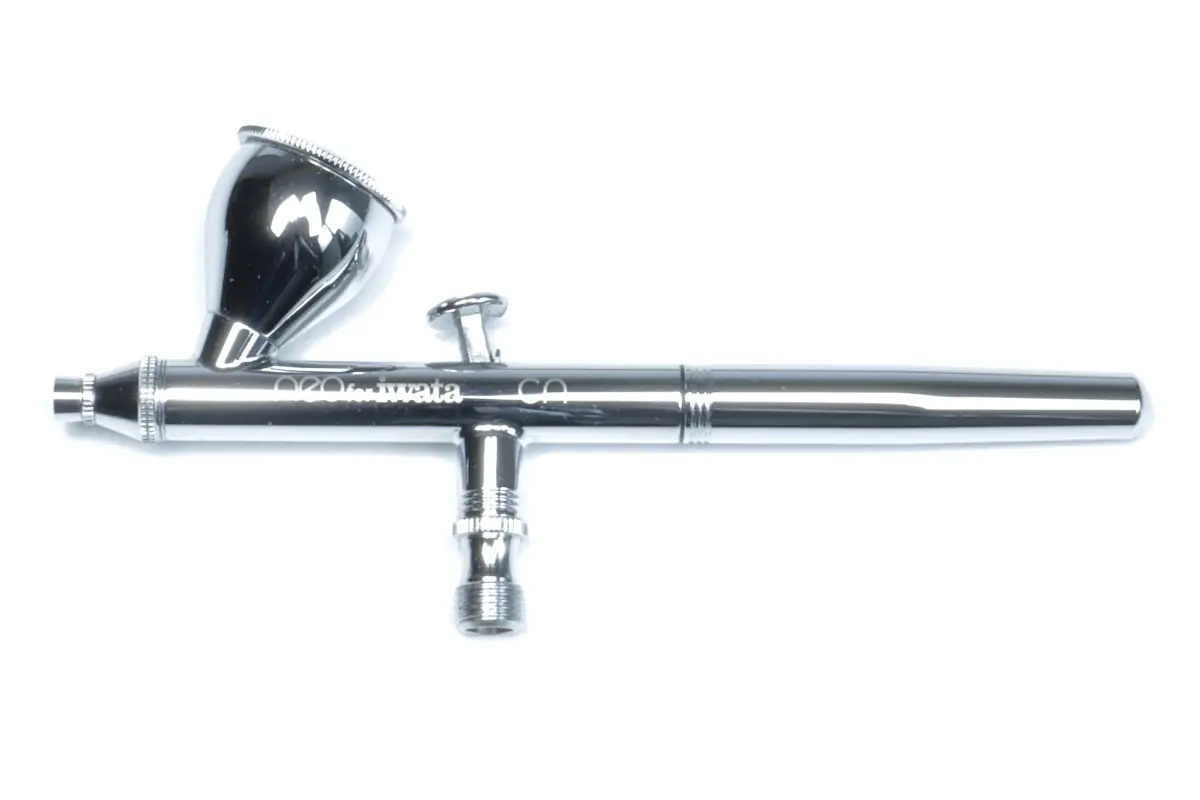
🔹 Iwata Eclipse HP-CS
- The gold standard for many artists.
- Fantastic atomization.
- Forgiving for beginners yet capable for pros.
- 0.35mm needle perfect for general-purpose work.
🔹 Badger Patriot 105
- Budget-friendly double action.
- Simple to maintain.
- Great for general spraying and learning trigger control.
🔹 Harder & Steenbeck Infinity CR Plus
- German precision engineering.
- Quick-change nozzle system.
- Loved by artists needing extreme fine detail.
🔹 Paasche Talon TG-3F
- Good balance of price and performance.
- Larger cup great for longer sessions.
- Solid build quality.
🔹 Grex Tritium TG
- Unique pistol-style trigger for comfort.
- Superb atomization.
- Great for those who find the traditional trigger tiring.
My advice: For most hobbyists, the Iwata Eclipse HP-CS or Badger Patriot 105 are phenomenal choices. Both deliver pro-level results without crushing your budget—or your patience.
💡 Pro Tips for Double Action Airbrush Users
Ready to dive into double action? Here’s how to master it faster:
✅ Practice Trigger Exercise
- Draw dots: test how lightly you can tap paint out.
- Practice thin lines vs thick lines.
- Try dagger strokes—start heavy, flick away to thin.
✅ Mind Your Air Pressure
- Too high = overspray, spidering.
- Too low = sputtering or clogging.
Typically:
- ~15–20 PSI for fine detail.
- ~25–30 PSI for general coverage.
✅ Thin Your Paint Properly
Double action airbrushes are sensitive to viscosity.
- Too thick → clogs.
- Too thin → spidering.
Start with manufacturer recommendations, then adjust based on feel.
✅ Clean Thoroughly
Because paint passes through fine channels, double action airbrushes require meticulous cleaning.
- Flush with cleaner between colors.
- Occasionally remove and clean the needle.
- Disassemble for deep cleans when switching paint types.
“The difference between an airbrush working like a dream or sputtering is how clean it is.” — Pro airbrush artist
✅ Don’t Be Intimidated
Double action feels weird at first—but it’s purely muscle memory. Once it clicks, you’ll never want to go back.
📏 Quick Comparison: Double vs Single Action
Still debating which airbrush style is right for you? Here’s a fast side-by-side:
| Double Action | Single Action | |
|---|---|---|
| Trigger Control | Air + paint flow | Air only |
| Paint Adjustment | Dynamic, mid-spray | Fixed via knob |
| Detail Capability | Excellent | Limited |
| Ease of Use | Steeper learning curve | Very easy |
| Cleaning | More parts to maintain | Simpler |
| Price Range | Generally higher | Generally lower |
If your focus is fine detail, artistic control, and smooth gradients, double action is the way to go. But if you want simplicity and fast coverage, single action may still have its place in your toolkit.
✅ Conclusion & Final Thoughts
Double action airbrushes have earned their reputation as the gold standard for precision and versatility.
Yes, they’re more complex. Yes, they demand practice. But if you’re serious about achieving professional results—whether in modeling, illustration, automotive art, or custom projects—a double action airbrush is a tool worth learning.
It’s the bridge between average results and show-stopping detail.
If you’re ready to level up your airbrushing, give a double action airbrush a shot. You’ll open doors to creative possibilities you never knew existed.